Thursday, April 6, 2017

Process of Selecting Accounting Software


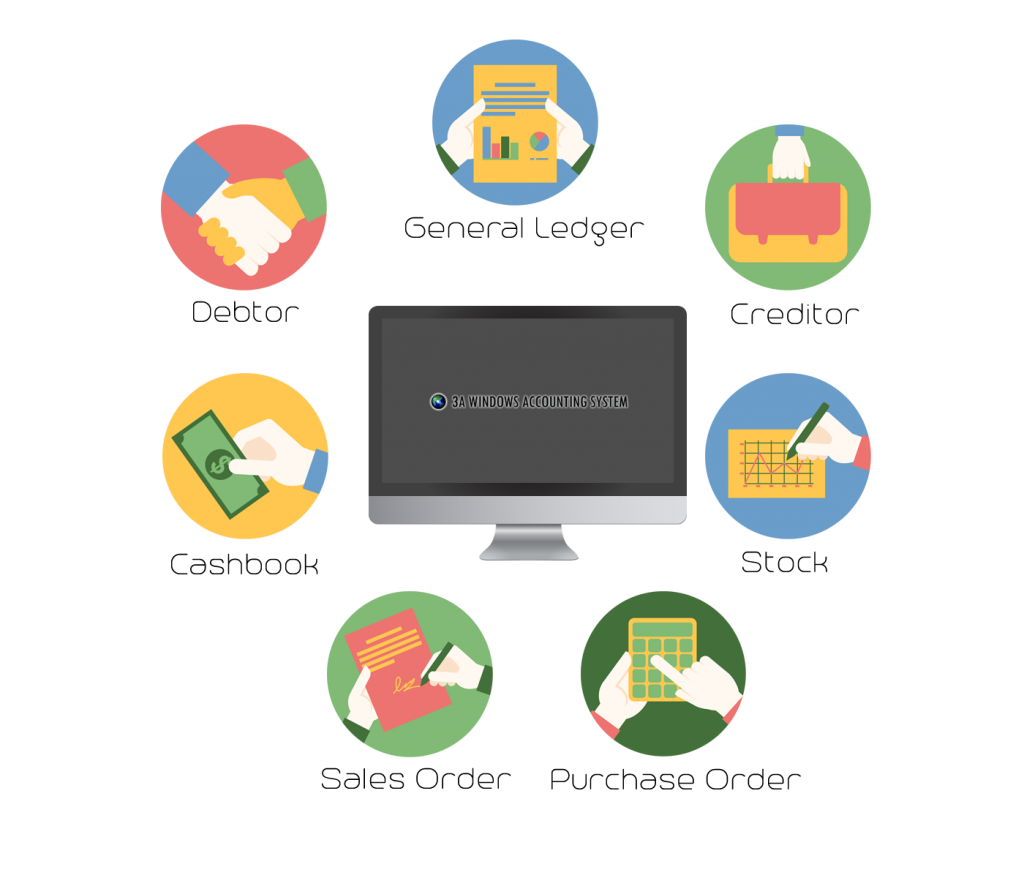
The process of selecting accounting software regardless of whether you are looking for an entry level product or an enterprise e-enabled total business management accounting software system can become the most difficult task an organization and most particularly its selection team leader can ever undertake.


That's why we have given our user and consulting subscribers all of the tools they need to make this process less threatening, more efficient and certainly more effective for choosing accounting software.

Image result for accounting system
At it's core, The Accounting Software Library, is a database of detailed information concerning most of the leading accounting software selection on the market today (QuickBooks through SAP, General Ledger through Enterprise ERP). We provide you with a list of features from which you can build your needs definition. All you have to do is select which of the features best describe your requirements and the program will rank each of the 150+ products in our database according to how well they meet your unique requirements. If your needs are complex or specific to your industry, you can even create a totally automated RFI/RFP. Obviously the program does a great deal more, but that's it in a nutshell.


Image result for accounting system
There are any number of information sources you could access to assist you identify the best-suited products, but the real question is what are you going to receive. The Accounting Software Library is the oldest and most respected source of software selection information. We are the only accounting software selection tool that helps you through the entire process.

There is a great deal of information in this Web site but you might just want to browse through this first page as it contains sufficient information for you to understand the sheer power of this unique tool and of greater importance why you should purchase it.

More information about E-Soft Accounting System, visit us @ www.e-soft.com.my OR www.e-soft.my

Wednesday, March 22, 2017

Cutting Costs Using Time and Attendance Tracking System

Time and attendance tracking system promises a big return in investment for business organizations. Its specialized features help cut down costs in almost all units of the organization.

Time and attendance tracking are important for effective employee and organizational performance. Monitoring these important aspects through automation has made things better and simpler for managers. Rather than manually recording and updating time and attendance, automated tools enable managers to simply glance over a computer and know exactly when employees show up for work and how wisely they spend work hours.


With the use of time and attendance tracking systems, organizations have been able to cut down costs on many different aspects. Through this system, the resources previously needed for the tracing, monitoring, and updating information on time and attendance are brought down. Since this system records to the exact last seconds, previous errors in recording have been stamped out.


Time theft and buddy punching are also crashed out from the list of problems organizations face. These fraudulent practices of employees who arrive late or take long lunches and then bribe time record keepers to cheat management are completely eliminated. Imagine if multiple employees do this every single day, then the amount of hours stolen for productive work will cost the organization a lot in figures.


Another benefit of using this kind of automated system is the cutting back in all costs necessary for buying supplies like ink and ribbon, which were used for the old  punch clock systems. Automated systems like this use high-technology machines that utilize sensors and identify bar codes in ID badges which they electronically record and compile in a central database. This allows for managers to easily view all gathered data by the click of a button, eliminating the need of sifting through piles and piles of papers and information sheets which was typical of the manual recording method. In long-term view, a lot of money can be really saved by the company.


Another advantage of this system is their report-generating feature.  Because everything is captured into the central database, managers can simply be alerted when employees are working beyond the required business hours.  Then, managers can readily notify these persons through a prompt message sent via email.


It is also with the support of this system that the human resource department can view the time logs of employees and see their respective compensation and salary for the hours they have worked. Thus, the organization can justify the salary of all employees based on their job history.


Clearly, the long-term benefits of time and attendance tracking system outweigh its cost. It is then prudent of organizations to do a one-time spending on this automated system.


E-Soft Payroll, Time Management & Human Resources System is a system that is certified by Lembaga Hasil Dalam Negeri (LHDN). More Information, please visit us @ www.timeclockingsystem.com

Tuesday, March 14, 2017

HR Software – Stay Ahead With The Latest Innovations In Human Resources


For some individuals, HR is characterized as the division that utilities the services of specialists, get huge amounts of emails, generates payrolls and different types of documentation that relate to the workers. However, this industry is changing quickly today, utilizing innovation & technology that is significantly more progressed than any other time in recent history. The manually overseen department has now developed into an industry that’s uses latest HR software widely.


Over the years, HR has proved to be an imperative part of any organisation. Without a proficient HR department to run an organisation, numerous companies have found it difficult to keep up great relations with & amongst workers and maintain business growth constantly.


Image result for human resource management software
Human Resources Management System


HR software has been in use for years now in the business sector and albeit at first, the layouts were difficult and complex, the HR software which is accessible today is produced to be more effective and extremely easy to use.


The HR software that is accessible nowadays incorporates an extensive variety of choices, including HR fundamentals, for example, enrolment, management of workers records and payroll. However, it just doesn't stop there yet. HR software likewise incorporates a training program, session advancement and work process.


Another appealing part of the new generation HR software is the self-administration unit. This unit may permit the administration to concede certain access to workers, permitting them to check their data, the power to update their records and even demand a holiday. As a result, the frameworks can be arranged for the business owners and there are endless potential outcomes.


The motivation behind these HR software options has been to reduce the main part of manual handling, documentation and automate critical business procedures, so that the human resource department will have more concentration while dealing with the necessities of the workers. Workers relations are best managed on a person to person level Science Articles, so the utilisation of HR software to deal with the more standard routine is broadly encouraged.


The extra backing and individual focus on workers does not just make the workers feel more refreshing in the organisation additionally permit them to work hard and bring fulfillment with phenomenal performance. A standout amongst the most critical parts of HR is to resemble a delightful & concerned tutor that welcomes the welfare and excellent work done by the workers.


There is certainly an extensive variety of HR software available in the market. Of course it’s an excellent move to make an official request of every single accessible alternative to ensure that the HR software is perfect for your business. The HR software is intended to build up shared opinions for the worker and the business owner to have a smooth business relationship that would be profitable for both sides.


To find out more information about E-Soft Payroll, TMS and HR Management System, visit us http://www.timeclockingsystem.com/

Friday, March 10, 2017

Benefits of Enterprise Resource Planning Software (ERP)

Image result for erp software


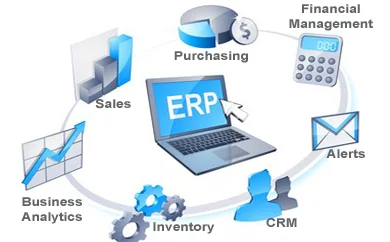
Usually, an organization thinks to implement ERP (enterprise resource planning) software to align business objective with latest technology solutions, to enhance customer confidence and stakeholder commitment, to optimum utilization of organization’s resources and assets. Typically, an organization is looking for good enterprise resource planning software with advance features and functions.


Benefits of ERP Software or ERP system introduces efficiency and improvement of its business processes. Good enterprise software helps you to achieve transparency and availability of data across all business functions. It gives right information at the right time to the right people for effective decision making. This decision would be based on accurate information, which will give positive result and increase productivity.


Image result for erp software
ERP System
ERP software helps you to optimize your human resource management and asset management. It also improves financial management. Trail balance, balance sheet, cash in hand, cash in bank, top supplier, top customer, ABC analysis, dead stock, WIP (work in progress) and other important reports are ready at any point of time. It helps in achieving better efficiency in organization reporting. ERP software streamlines the supply chain management and improves customer relationship management.


Enterprise resource planning software ensures data security and data scalability: organization can customize the enterprise software according to their requirements. It adopts systems that address changing technologies. It gives better ROI (return on investment). Organization can increase turnover with same human resource. There is a misconception that, ERP is for IT department and they will get more benefits, but it is not true. During implementation and after go-live, IT department responsibility is higher than other department. Proper training gives better output from the new system. Lack of proper training to user results wrong entry and create problem. Top management should understand the need of detailed user training. Ultimately, user is going to use this enterprise resource planning software.


More information about ERP System (Enterprise Resource Planning System), visit us @ www.e-soft.my


Tuesday, March 7, 2017

Benefits of Attendance Time Clocks


Image result for fingertec time clocking system


In the world of business, time is everything. You need to be able to do things quickly and without having to spend a lot of money on it. When it comes to attendance & time management, a lot of companies find that it is super hard to come up with a way to manage their attendance without having to spend a lot of money. The good news is that there is something that can help your business do that, and those are attendance time clocks. When it comes to your time problems, this is the best way to solve them. They are easy to install, and they do not require a huge investment to get up and running. On top of that, there are a lot of different styles to choose from. So even if you do not like the make and model of one of them, fear not. There is another model out there that is prefect for you. Today we are going to cover a few of the different models and what makes them so great!

First, before we get into the different types of attendance time clocks, we need to point out a few more benefits that you are going to get from using them. First of all, any kind of time clock that you go with, is going to offer you more control over the organization of your business. You are not going to have to make sure that everyone gets to work on time, the time clock will do that for you. This helps you red flag some of your employees that have attendance issues. Also, these kinds of clocks are very low dollar and made for companies on a budget, thus, you are not going to have to break the bank to install these. They are a very effective, automated way of tracking and scheduling your attendance.
Image result for time clocking system


Attendance time clocks are nice, but one thing that people do not know is the fact that there are a lot to choose from. If you want just your basic run of the mill clock, then you can get a punch card time clock. The great thing about these is that they are cheap and pretty easy to use. The only problem with them is the fact that you have to go check the cards to see when people are punching in. If that is not something that you want to worry about, then you may want to go with the clocks that have the badge reader on them. These do cost a little bit more, but all the information can easily be pulled up on the machine. Not only that, but it will automatically red flag people who are late for you. That way you do not have to spend the time to hunt them down.

Either way you choose to go, these attendance clocking system are going to be a great way to make sure that your employees are getting to work on time. Remember, in the business worldFree Reprint Articles, time is money. If people are riding your time clock or not showing.


More information about Time Control Management System, visit us @ www.e-soft.com.my or www.e-soft.my

Tuesday, February 28, 2017

E-HR System by E-Soft

E-Soft E-HR System is a web-based Human Resources Management System where an employee can punch attendance, apply leave, apply OT, view payslip etc. on the web. The system also allows leave notification and approval. The system can keep track of all employees' leave records, entitlement and balance.


E-Soft E-HR System provides an online time sheet that empower employees while reducing workload for HR. Employees gain convenient access to their attendance information, apply OT and leave online, as well as view / print their payslip.


More information regarding Payroll and E-HR System from E-soft, Please visit us @ e-soft.my


Friday, January 31, 2014

Scan Passport In Hotel Management System

The new device used in E-Soft Hotel Management System - Passport Scanner.  It helps hotel front office to shorten the guest check in time for foreign guest.  The passport scanner will be able to scan all passport from various countries.  It will perform the following in E-Soft Hotel Management System:
a. To scan & capture the guest data directly from passport via OCR (Optical Character Recognition) technology.
b. To capture the photo from the passport.
c. To scan & capture a digital copy of the passport.


Read more on Hotel Management System at http://www.e-soft.com.my

Monday, February 11, 2013

ERP Software As An Integration Tool


Enterpriseresource planning (ERP) software is a prerequisite for any organization seeking to become an integrated enterprise. In many respects, ERP provides the structural and architectural foundation upon which an integrated enterprise is built.
In a nutshell, ERP is a tool that enables a company to achieve cross-functional integration, transactional efficiency, and timely and accurate reporting.
For example, when a customer accepts a quotation for a product, sales has an ability to convert that quote into a sales order with a click of a mouse. If the terms of an order require pre-payment, the ERP system can be configured to electronically trigger the activation of accounts receivable invoicing functions. From an operational perspective, the order can become visible to an MRP or DRP2  engine  that issues make and/or buy recommendations. And, those recommendations can be converted into a work order or purchase order at the click of a mouse. These are but a few examples of the myriad of opportunities offered by ERP – opportunities to process transactions quickly, efficiently, and with reduced scope for error.
The above scenarios largely focus on processes that can be automated with ERP. Obviously, an organization still needs people to receive and store product, manage the shop floor, and make business decisions. However, it will need far fewer people (and associated payroll expenses) to perform mundane and time consuming data entry and reconciliation tasks. The system can perform those tasks, with greater efficiency, accuracy, and reliability.
An ERP system can accomplish these tasks with precision because it draws upon a single version of data residing in a common database. For example, in an ERP environment, a company isn’t likely to find itself with a sales order that conflicts with an invoice packet. Both document sets will pull common data from the same source, with minimal need for human intervention.
With data stored in a common database, a company can also position itself to achieve timely and accurate BI (business intelligence) reporting. Gone are the days of needing armies of business analysts to export data from various Excel spreadsheets and Word documents into other spreadsheets. Also gone are the days where analysts spend weeks analyzing data only to make recommendations based on data that has since become stale.
With the volatility of markets and the pace of change, today’s businesses don’t have the luxury of time. Decision-making has to be based on analysis of the most current data.
Fortunately, business intelligence tools provide powerful reporting algorithms that can efficiently slice and dice data. Today’s business analysts are no longer mere data miners and aggregators. They can provide value-add in the form of data analysis, data interpretation, and recommendations thereupon.

Saturday, February 11, 2012

Hotel Online Reservation System

The Hotel Online Reservation System are designed to enables internet guest to check room availability, confirm the rooms in “real-time” and proceed with payment immediately without having to bother with time-consuming emails and faxes between guests and your reservation staff.

Benefits:

  • Saves valuable time, and cuts costs – Availability checks and instant confirmations eliminate email exchanges between guests and your reservations department. Valuable reservations staff time is saved because reservation requests will no longer have to be processed. Guests can check availability and book instantly, thus closing a booking without having to wait for your reservations staff to confirm a room by email.
  • The rates, availability etc on your website are real-time – The reservation system will directly point to your hotel server.
  • Reliability and efficiency – Guests find the Internet reservations system easy-to-follow, with uncluttered screens and prompts. Reservations & payment details will be updated directly to E-Soft Hotel Management System.
  • No third party involvement – No third party involve in taking order online except payment gateway provider which help you to accept Credit Card payment.
  • Stay ahead of your competitors – With the growing trend towards Internet-based hotel bookings across the industry, online hotel bookings from websites are increasing dramatically. The Hotel Online Reservation System ensures that you are at the forefront of this industry bookings trend.

Software Features

  • Link from your existing website.
  • Instantly check room rate & room availability by guests.
  • Online room reservation page by guest.
  • Payment Processing by Payment Gateway Provider.
  • Update E-Soft Hotel Management System for successful reservation.

E-Soft Hotel Management Front Desk Software

The E-Soft Hotel Management System (HMS) helps to manage & operate small to medium sized hotels. E-Soft Hotel Management Software is a user-friendly, uncluttered and compact Hotel Management Software that automates the operation and management of a hotel. Our Hotel Management Software seamlessly integrates Reservations, Front Desk, Housekeeping functions on a single platform. An extensive variety of management reports can be generated from the E-Soft Hotel Management System.

The features of the E-Soft Hotel Management Software are as follows:-

  • Hotel Guest Information Database Maintenance
  • Hotel Room Reservation
  • Hotel Room Availability
  • Hotel Check-In & Check-Out
  • Event Management System
  • Laudry Collection & Delivery
  • Mini Bar Inventory Control
  • House Keeping
  • Hall Rental
  • Group Check In / Check Out
  • Lost & Found
  • Telephone Call Accounting System
  • Billing & Invoicing System
  • Guest Message System
  • Management Reports

Wednesday, June 15, 2011

How ISO 9001 Improve Management Of Your Company?

Regardless of the size of a business, management plays an important role in keeping it alive. This is why a lot of businesses these days try to implement solid management frameworks to keep things running as smooth as possible. Without proper management, it would be difficult for a business to carry out projects and produce high-quality products. In many countries, businesses usually fail because of inefficient management systems.

Created by a group consisting of representatives of local standards organizations from different countries around the world, ISO 9001 can greatly improve the production output by renovating the way a business is operated. Careful documentation is implemented, providing managers with a better overall view of their businesses. It also helps in keeping the workers motivated, and it improves the efficiency of business processes by minimizing losses and expenses attributed to defective products or other liabilities.

ISO 9001 contains a series of business and management prerequisites that help a company to keep up with international standards. Upon successful implementation, an ISA registrar will issue a certification as proof that a business meets all the business specifications set by ISO 9001.

The ISO 9001 standard is applicable to any kind of business, department, or branch that wants to improve the way it operates. However, by implementing ISO 9001 in an entire company instead of a single branch, a company can get the most out of the quality management system. With the entire business system working uniformly, any business will be able to see significant improvements in overall production and income.

The good thing about ISO 9001 is that it is a highly compatible standard. This means businesses with existing standards, such as one that has ESD 20:20 certification, can further optimize their profits without having to perform too much management restructuring, potentially saving lots of time and resources. Existing standards, combined with ISO 9001, even become more effective.

Any business interested in streamlining their operations should get a copy of the ISO 9001 standard. Although not all points in the standard are required to be eligible for certification, implementing them all ensures a company will get the most out of the standard.

Visit http://www.iso9001store.com for more information.

What Are The Differences Of ISO 9001 And ISO 14001?

The International Organization for Standardization (ISO) is a managing body that was founded to provide quality and environmental management systems to industries across the world. The ISO 14001 and ISO 9001 standards are accreditations that are issued to organizations that meet or exceed the criteria set by the ISO. The certifications, which differ in criteria, have been proven to increase profitability and commercial status for the holding parties.

Some of the core differences between ISO 14001 and ISO 9001 stem from the criteria covered by each standard. As a quality management certification, ISO 9001 is awarded based on set standards being met in key areas. These areas include quality management systems, management responsibility, resource management, and how quality performance is measured, analyzed, and improved.

The standard ISO 14001 is an environmental management certification that is designed to assist organizations as they develop in-house environmental management systems. This standard is based on a model of continual improvement, which differentiates it from the fixed criteria that must be met to be awarded ISO 9001 accreditation. For an organization to achieve the certification, it must develop an ISO 14001-compliant environmental management system through a process of planning objectives, implementing processes, measuring and monitoring the processes, and improving the system based on the results of the monitoring stage.

As a part of ISO 14001 accreditation, a continual improvement process (CIP) is required. This CIP is based on expanding the environmental management system across all sectors of the business, using the system to enrich other processes and improving over time by continual monitoring. Many organizations seek to be awarded both ISO 14001 and ISO 9001 certification as it demonstrates a high overall standard of quality and environmental management structures.

The scope of each standard is what defines the differences between ISO 14001 and ISO 9001. The routes to accreditation and methods of maintaining the systems once certification has been achieved are similar across both standards. Both ISO 14001 and ISO 9001 standards can be applied for once a compliant management system has been implemented following the ISOguidelines. An intensive external audit will be required for either standard with an additional internal audit required for ISO 9001.

Both ISO 14001 and ISO 9001 are measures of the processes used by an organization, not the end product. This means that a company that holds ISO 9001 accreditation can still produce a poor end product providing the correct paperwork is in place and the quality is consistent. Similarly, ISO 14001 certification simply means that there is a system in place to meet that organization’s specific environmental targets.

Read more on ISO 9001 Standards at http://www.iso9001store.com

Saturday, March 26, 2011

ISO 9000 Document Management Software System

Today’s manufacturing companies that seek ISO 9001 compliance-(regardless of their motivation to do so) probably don’t find it that difficult to create intelligent documentation. After all, a few days with a good consultant or a quality manager can take care of document creation. The problem lies in the gap between what employees are doing and what employees are supposed to be doing (in terms of adhering to documentation) and the gap between the manner in which processes are being implemented and the manner in which they should be implemented ( in accordance with documentation). In other words, the problem lies in the way processes are strategized and applied and in the way employees commit to standards when compared against existing documentation. How can a company overcome these issues? The answers may be simpler than you think.

Automation is the Answer for ISO Control
If your underlying processes are poorly strategized then an automated document management software system won’t be of much use. However, once the processes have been effectively planned (and applied) a document management software system can speed process-to-process management by leaps and bounds. Companies that automate not only to comply with ISO standards but to generate more revenue by performing less administrative labor save weeks and even years worth of time just by automating their processes and documentation control with a document management software system.

Making Amends
The right document management software system and ISO document control would also allow companies to find deviations and nonconformance events faster and move those events to resolution phases in a small fraction of the time they were originally routed—if they were routed at all. Some ISO 9000 document management software systems may even be combined with a CAPA QMS solution. This is especially valuable when determining the root cause of major to minor deviations.

A Document Management Software System and Employee Training
ISO standards do not require any type of automation but ISO standards lend themselves to automation in a way that’s quite remarkable. Take for instance the following document management requirements from the official ISO 9001 International Standard.

ISO 9001 Section 4.2.3
ISO standards make it clear that ISO 9001 “approved” companies must define (i.e., document) how they will approve documentation, how they will identify documentation changes, how they will update/reapprove revised documentation, how external documentation will be managed and how assurance will be provided that documentation will be available when it is required. 1 And that’s only a shadow of things to come! A document management software system designed for strict compliance can automate the approval of documentation, the identification of document changes, updates and reapproval notifications, external documentation management and high-level document security. Some solutions also integrate training and online exams as well.

How Much Could You Save?
Chances are high that automation will save you thousands, tens of thousands or even hundreds of thousands of dollars annually depending on the size of your company. Just foregoing a typical document routing process (a manual process) can save many employees fruitless trips back and forth from one office to another. Who wouldn’t want to avoid those time consuming searches through 3-ring binders and lost documentation due to employee absence or neglect?

Conclusion
Regulation and control are the future for manufacturing. Gone are the days of free experimentation and a blind eye toward material waste. Today is the day of premeditated design, quality assurance and web-based automation. If your company plans to be, or already is, compliant with ISO 9001 standards why not consider automating those ISO 9001 controls with a document management software system.

Read more on ISO 9000 Software at http://www.iso9000-standards.com

Monday, August 30, 2010

The ISO 9001 & ISO 14001 Standards and the environment

The ISO 9001 & ISO 14001 Standards and the environment

The ISO 14000 family of International Standards on environmental management is a relative newcomer to ISO’s portfolio – but enviroment-related standardization is far from being a new departure for ISO.

In fact, ISO has two-pronged approach to meeting the needs of business, industry, governments, non-governmental organizations and consumers in the field of the environment.

On the one hand, it offers a wideranging portfolio of standardized sampling, testing and analytical methods to deal with specific environmental challenges. It has developed more than 350 International Standards (out of a total more
than 12000) for the monitoring of such aspects as the quality of air, water and soil. These standards are means of providing business and government with scientifically valid data on the environmental effects of economic activity.

They also serve in a number of countries as the technical basis for environmental regulations.

ISO is leading a strategic approach by developing environmental management system standards that can be implemented in any type of organization in either public or private sectors (companies, administration, public utilities). To spearhead this strategic approach, ISO establish a new technical commitee, ISO /TC 207, Environmental management, in

1993. This followed ISO’s successful pioneering experience in management system standardization with the ISO 9000 series for quality management.

ISO’s direct involvement in environmental management stemmed from an intensive consultation process, carried out within the framework of a Strategic Advisory Group on Environment (SAGE),set up in 1991, in which 20 countrie, 11 international organizations and more than 100 environmental experts participated in defining the basic requirements of a new approach to environment-related standards.

This pioneering work was consolidated with ISO’s commitment to support the objective of “sustainable development” dicussed at the United Nations Conference on Environment and Development in Rio de Janeiro in 1992.

Today, delegations of business and government experts from 55 countries have participate actively within TC 207,

and another 16 countries have observer status. These delegations are chosen by the national standars institute concerned and they are required to bring to TC 207 a national consensus on issue being addressed by the commitee.

This national consensus is derived from a process of consultation with interested parties.

From its beginning, it was recognized that ISO/TC 207 should have close cooperation with ISO/TC 176, Quality management and quality assurance, in the areas of management systems, auditing and related terminology. Active efforts are under way to ensure compatibility of ISO environmental management and quality management standards, for the benefit of all organizations wishing to implement them.

Elements Of ISO 14001 Environmental Management System

Elements Of ISO 14001 Environmental Management System

ISO/DIS 14001 is one of a series of emerging international environmental management standardsaimed at promoting
continual improvement in company environmental performance through the adoption and implementation of an environmental management system. The (draft) standard specifies the core elements of an EMS, but contains only those elements that may be objectively audited for certification or self-declaration purposes. A companion guidance standard, ISO/DIS 14004 includes examples, descrïptions and options that aid in the implementation of an EMS and in integrating the EMS into overall management practices. It is not intended for use by certification/registration bodies.

ISO/DIS 14001 defines an overall environmental management system , closely modeled on the ISO 9000 quality systems standard , and covers the following key elements:

· Establishment of an appropriate environmental policy that is documented and communicated to employees and made available to the public, and which includes a commitment to continual improvement and pollution prevention, regulatory compliance and a framework for setting objectives;
· A planning phase that covers the identification of the environmental aspects of the organization’s activities, identification and access to legal requirements, establishment and documentation of objectives and targets consistent with the policy, and establishment of a program for achieving said targets and objectives (including the designation of responsible individuals, necessary means and timeframes);
· Implementation and operation of the EMS including the definition, documentation and communication of roles and responsibilities, provision of appropriate training, assurance of adequate internal and external communication, written management system documentation as well as appropriate document control procedures, documented procedures for operational controls, and documented and communicated emergency response procedures;
· Checking and corrective action procedures, including procedures for regular monitoring and measurement of key characteristics of the operations and activities, procedures for dealing with situations of non-conformity, specific record maintenance procedures and procedures for auditing the performance of the EMS;
· Periodic management reviews of the overall EMS to ensure its suitability, adequacy and effectiveness in light of changing circumstances.

The EMS as outlined in ISO 14001 provides a structured process for the achievement of continual improvement, the rate and extent of which is determined by the organization in light of economic and other circumstances. Although some improvement in environmental performance can be expected due to the adoption of a systematic approach, it should be understood that the EMS is a tool which enables the organization to achieve and systematically control the level of environmental performance that it sets itself. The establishment of an EMS will not, in itself, necessarily result in an immediate reduction of adverse environmental impact. Indeed, care needs to be taken that the mere establishment of an EMS does not lull the organization into a false sense of security. But effectively used, an EMS should enable an organization to improve its environmental performance and avoid or reduce adverse environmental impacts over time.

Why is Six Sigma Fascinating in ISO 9000?

Why is Six Sigma Fascinating in ISO 9001 Standards?

Six Sigma has become very popular throughout the whole world. There are several reasons for this popularity. First, it is regarded as a fresh quality management strategy which can replace TQC, TQM and others.

Many companies, which were not quite successful in implementing previous management strategies such as TQC and TQM, are eager to introduce Six Sigma.

Development process of Six Sigma in quality management

Six Sigma is viewed as a systematic, scientific, statistical and smarter (4S) approach for management innovation which is quite suitable for use in a knowledge-based information society.

Second, Six Sigma provides efficient manpower cultivation and utilization. It employs a “belt system” in which the levels of mastery are classified as green belt, black belt, master black belt and champion. As a person in a company obtains certain

training, he acquires a belt. Usually, a black belt is the leader of a project team and several green belts work together for the project team.

Third, there are many success stories of Six Sigma application in well known world-class companies. As mentioned earlier, Six Sigma was pioneered by Motorola and launched as a strategic initiative in 1987. Since then, and particularly from 1995, an exponentially growing number of prestigious global firms have launched a Six Sigma program. It has been noted that many globally leading companies run Six Sigma programs (see Figure 3), and it has been well known that Motorola, GE, Allied Signal, IBM, DEC, Texas Instruments, Sony, Kodak, Nokia, and Philips Electronics among others have been quite successful in Six Sigma. In Korea, the Samsung, LG, Hyundai groups and Korea Heavy Industries & Construction Company have been quite successful with Six Sigma.

Lastly, Six Sigma provides flexibility in the new millennium of 3Cs, which are:

• Change: Changing society

• Customer: Power is shifted to customer and customer demand is high

• Competition: Competition in quality and productivity

The pace of change during the last decade has been unprecedented, and the speed of change in this new millennium is perhaps faster than ever before. Most notably, the power has shifted from producer to customer. The producer-oriented industrial society is over, and the customer-oriented information society has arrived. The customer has all the rights to order, select and buy goods and services. Especially, in e-business, the customer has all-mighty power.

Six Sigma with its 4S (systematic, scientific, statistical and smarter) approaches provides flexibility in managing a business unit.

Sunday, May 23, 2010

The Path to ERP for Small Businesses

When looking for business software, small companies might fall into the trap of being selected instead of selecting vendors. This usually happens because small companies do not allocate extensive time and resources to the process and do not have selection methodologies, which help decision makers select a product without further investigation.

Not every company takes advantage of a sound software selection methodology. The good news is that other companies have been through complex selection projects before, built sophisticated tools, and developed processes to make it solid, speedy, and successful. This article will broadly review the phases involved in a well-organized software selection methodology. Adhering to a sound methodology helps ensure that you select the right software rather than risk wasting money on all the problems that can arise down the road from a selection, which fails to meet the needs of your organization.

No matter which methodology you use, the process has three main phases: A) research, B) evaluation, and C) selection.

You know what your main activities are; therefore you should have a pretty good idea which processes the best ERP system for your organization should support. But, since there are several ways to do the same thing (e.g., picking and shipping), do you know which way is easier and more efficient for your organization? Remember, just because a process or workflow works well, it does not mean it’s the best way to do it. You should always find ways to improve a process or workflow.

To make sure you find the best ERP system for you company, you must first understand what processes are the most appropriate for your organization. Appropriate, in this case, means suitable for your industry, but also efficient for your company (sometimes processes are defined along the way by people who try to make their life easier, not always including the others) Defining workflows for the major activities of your company will help you better define what you should expect an ERP solution to do for your organization.

At the end of the research stage, you should have a pretty good idea of your company’s software requirements and also have a comprehensive list of sources of information where you can find what you need for the next stage—comparable vendors and products best suited for your organization.

Sunday, May 2, 2010

E-Soft ERP System

The E-Soft Realtime ERP Solutions will be targeted to the SMI, with much emphasis given to simplification and easy of use. Thus, the degree of customisation would be higher, means more flexibility to users. The E-soft Software team are specialized in the ERP System because all the team members are having manufacturing background & ISO 9000 system implementation experience. Most of the team members have at least 5 to 10 years working experience in manufacturing environment. Therefore, the implementation of ERP System will be much more realistic and easier. The E-Soft ERP System will also compliance with the ISO9000 standard. Our strong point is our experience & specialization in manufacturing. In fact, besides having working experience in the manufacturing sector, setting up of MRP system to various kind of industries for our clients also provide us the hand on experience in the implementation. Our MRP clients are consist of wide variety of industries from the plastic moulding, plywood, sawn timber, speaker, speaker box, stamping industries, packaging, bonded warehouse, voice coil, cone paper, air-condition, industrial hose to KD Plant. These does not include non-industries business such MLM, pawnshop, workshop and others application. Therefore, we are not only selling the software but value added in consultation and advisory. Since the working flow and management needs to work hand in hand with the application software, therefore in the process of implementation, we will play a role of consultant and advisor in preparing the working procedure and work flow.

We always tried to achieve realtime data collection ever since our implementation of ERP system. Just try to imagine if a finished products have manufactured in production line, going through QC inspection, transfer to store, issue to shipping area, going through QA inspection and finally loading to container, it have come across so many people’s hand. Human error in filling up documents, error in key in entry, missing of documents will happen. Thus, by implementing realtime ERP Solution, all products will be scanned either by barcode, Link machine to PLC to capture production quantity or detect through RfiD tags, the result will input directly to the system. Although, the initial cost by implement the realtime data collection are high, but it’s worth investing because it will eliminate human error and the data are always real time. However, not all industries are suitable to go realtime. It depends from one industry to another.

The E-Soft ERP Modules are consists of:

1. System Manager.

This module shall cover the master files maintenance such as Customer Files, Supplier Files, Item Master Files, Bill Of Material, Price Files Maintenance, Machine Files Maintenance and etc. The setting of user’s rights will be defined in this module, specific in detail for add new record, edit, delete, enquiry as well as printing reports.

System Manager also cover the utilities features which will provide supports and maintenance to the ERP system, for instance Backup Function, Restore Function, special tools such as change code no and so on.

2. Distributions. (Sales Order Processing & Shipping Control System)

The Distributions module covers the Sales Order Processing, Shipping Control System and Customs Control System.

Upon receipt of sales order from customer, the sales order shall be keyed into the Sales Order System, so as to generate a New Order Listing. The necessary information of the sales order shall be captured into

the system such as P/O Number, Customer, P/O Date, Delivery Place, Item code, quantity, unit price, expected delivery date and so on.

Shipping Control System shall maintain the shipping records for the goods sent out to customer. The system shall link to the Sales Order Processing to deduct the order quantity. The system will print the necessary shipping documents such as Delivery Order, Invoice, Packing List, GPB 1, Customs 9, Customs 1 and etc.

3. Warehouse (Material , WIP & Finished Goods Stock Control)

This module covers the stock control of raw material, work in progress (WIP) and also finished product.

This module will monitor the stock movement of the stock throughout the company in various forms either in the form of raw material, wip or finished product. The incoming module shall register any form of incoming input to the stock either from supplier, production and etc. On the other hand, the outgoing module shall records all type of outgoing transaction, either issuing to production floor, shipping to customer, return to supplier and so on.

Stock taking module was provided to enable users to carry out stack taking process. It covers the printing of inventory tag, updating of stock take figure, generate stock variance report, reset opening figure and etc.

Other features such as enquiry on stock balance, transaction, common part, part shortage and obsolete part are also available. It can be viewed on screen or printed out in report format.

In order to achieve real time stock control system, barcode or other technology such as RFiD can be deployed in the warehouse module.

4. Production Planning

This module consists of 2 main areas, namely:

Production Capacity Planning.

Production Scheduling.

Production capacity planning involved the process of calculating the production capacity on a specific period based on machine available against order received.

On the other hand, production scheduling shall allowed users to process the production scheduling, so as to obtain a optimum production schedule.

With production planning module, users can easily maintain customer satisfaction while ensuring conformance to plans and profitability across the enterprise

5. Procurement.

The Procurement Module handles the creating, printing and follows up of purchase orders. The purchase orders may apply to inventoried or non inventoried materials. Also maintained is purchase history and price history.

The purchase order tracking function will enable purchaser to track the purchased materials based on the required date. Upon receipt of material, the purchase order balance shall be updated accordingly.

6. Material Requirement Planning.

The Material Requirement Planning process is designed to make the production schedule replenishment quantities, explode through the bill of materials to create material requirement based on production schedule

7. Quality Control System.

The Quality Control System shall consist of:

IQC (Incoming QC) – all incoming materials shall go through this IQC inspection in order to ensure all materials received are in good order and condition.

On Line QC – This module will capture all On Line QC which is carried out on each product produced by production floor. Production rejects shall be obtained from the production floor and update into the system, in order to analyse the rejection causes.

QA (Quality Assurance) – to enable the sampling check on the outgoing product before delivery to customer. AQL level shall be determined by the management for the sampling size taken.

8. Mould History Control System.

The ability to maintain the history of every mould by calculating the numbers of shots for each mould based on production output.

9. Subcont. Control System.

This module will control the out flow and in flow of semi finished product send to subcontractor for subcont process. The system will be able to show the stock level stored in subcontractor’s site.

10. Audit Trial

This module shall capture all the audit trial of the activities carried out. All new entry, changes, deletion of data can be traced by date, time & users.